200 Words or Less: Not a Man

God is not a man, so don’t try to compare Him to one. God and man live by different standards and live their lives in different ways. Unlike man, who lies to avoid shame and judgment, God finds no need for deception. He does not feel shame, for He is the embodiment and the arbiter of Truth. Nor does He fear retribution, because He is the First Cause for creation and for behavior. Others cannot and will not influence Him. To permit this would abdicate His position as First Cause. Even when God became flesh and dwelt among us, the change of venue did not persuade Him to change His character.

He is also not a son of man. People procrastinate and change their minds. God is a planner and a doer.  He is not wishy-washy. From the beginning, His voice has declared His purposes and His person, generating a continuous line of creating moments where He has permanently altered reality. From darkness becoming light to sinners becoming saved, God has been intentional. His promises are fulfilled, because He has spoken. He is not a man, nor a son of man. He is the continuously creating, truthful, immutable, redeeming God.

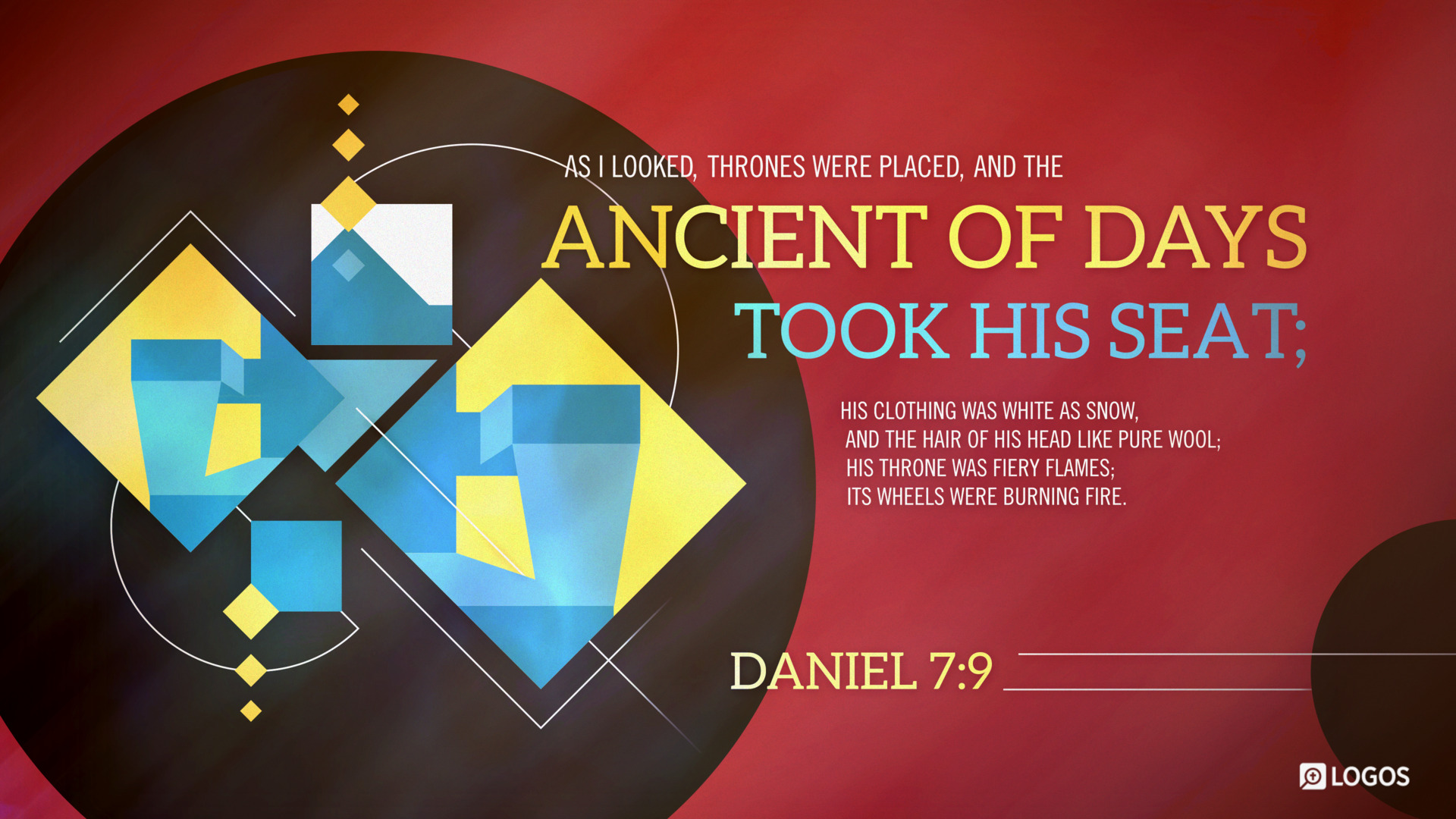
200 Words or Less: Ancient of Days

God has always been and will always be. He created what we know as “beginning” and He will create what know as “end.” Bookending these two distinct periods in history is eternity, and He is there too. Nothing is beyond His reach, nor does anything exceed His understanding. As a result history is not out of control. He created night and day, and He will do away them. He establishes rulers and deposed them. He knits together children and numbers their days  before they are born. There is nothing outside of His grasp. No wonder He says that no one can take His children out of His hands. He alone gives permission for the world to spin and sets our lives in motion. He is the Alpha. He is the Omega. To trust any other would be not only fruitless but also ignorant.

200 Words or Less: God is Clean

Then the priest shall wash his clothes and bathe his body in water, and afterward he may come into the camp. But the priest shall be unclean until evening. (Numbers 19:7)

Humans vary between clean and unclean. But God is eternally clean. God does not EVER require improvement, polishing, or purifying. He does not need an intercessor. He does not need to be isolated so that others will not be infected with His uncleanness. He’s forever clean.

God is self-sufficiently clean. He is the source of His cleanness. He is His own fountain of living water. He is the First Cause of all creation and, consequently, of all holiness. God does not improve or evolve, as some suggest. Cleanness erupts but never dissolves within Him. His self-sufficiency sustains His holiness.

God is wholly clean. He is the perfect atoning sacrifice for our sins, because in all ways God is clean. His directions are clean (His Word is Truth). His judgments are clean (He’s righteous in all His ways). There are no inappropriate thoughts in His omniscience, no abuse of power in His omnipotence.  There is no vulnerability to wickedness in His omnipresence. He may witness a million sins but He commits none of them. His cleanness protects Him from being tempted and from tempting.  There is no blemish in Him. He is wholly, eternally, self-sufficiently clean!

God – in 200 words or less

At the beginning of this month, I wrote a post labeled “Two Question Christianity.” In that article I suggested that there were two main questions that Christians should consistently ask themselves: 1) What is this scripture saying about who God is and 2) How do I respond to this God?

While both of these questions are important, I believe that the first question is superior to the second one. Modern psychology has so infiltrated Christianity that an overemphasis on self often occurs in our theology. This can lead to an anthropomorphic view of God (i.e., making God in our image) and an idolization of our selves. But when we begin with who God is, we place Him both at the center of Christianity and as the starting point for answering the second question. In other words, He defines us and our actions, not the other way around.

Therefore, over the next two weeks I will be breaking from my usual pattern of writing one to two entries a week and will post something every day that helps answer the question “What is this scripture saying about who God is?”

However, trying to “define” God can get cumbersome and wordy. That is why I am going to try to follow the advice of one of my former professors and keep these articles short. It will be difficult, but I am going to attempt to write each post in 200 words or less. Good theology should be concise and clear. I hope to accomplish both of these goals. Still, 200 words is not a lot, and if you see anything in the verses that you want to add (or ask), please feel free to do so in the comments section.

At the end of the series, depending on responses from you, we may explore the same scriptures, just with a focus on question #2, or we may continue on with new topics altogether.

I hope you find this series helpful. The first post will be coming out later today. May God bless you as you seek to know Him more.

Two Question Christianity

Since childhood the idea of competing against myself has always propelled me farther than the act of competing against others. Can I read a thicker book this time than I did last time? Can I write a longer, or better, story than I did last time? Can I climb higher in the tree? Can I run farther or faster during this track meet? Each personal success pushed me to attempt the next level.

Therefore, when I began reading the Bible at age 14 Continue reading

The Apologetic of Power

wpid-wp-1436881109783.jpeg

When I was a teenager, I was the one my friends always sought out for advice. I do not know if this is because they sensed a wisdom in me they did not receive elsewhere, or if it was due to the brash self-confidence in my intellect, which masqueraded as blunt honesty. Either way, the more I talked to people the more I realized that I tried to pursue the “third side of the coin.” That unique perspective, or outlook, that made them reevaluate their situation and choices. In truth, it wasn’t discernment at all. It was only creativity impersonating as insight. And if I was creative enough, if I gave just the right analogy, I could talk almost anyone into my point of view.

This was a talent that I nurtured. One that I cherished and believed in.

And then I had kids. Continue reading

Apologizing Without Being Apologetic

wpid-wp-1435497576153.jpeg

In 1985, hidden beneath my sister’s old Billy Joel and Eagles albums, I found an LP with a picture of a lone man refusing to bow down to a monarch being carried through the streets. The body guard of this king is pointing an accusing finger at this rebel, making it clear that he will suffer for his crime. The title of this record was “No Compromise” by Keith Green. I knew nothing of this artist at the time, but I remembered my older sister listening to his music and reading his magazine, so I thought I’d pop the album on and give it a whirl. Continue reading

The Weapon of Suffering

During World War II one of the boldest Christian voices combating the evils of Naziism was that of Dietrich Bonhoeffer. He was a native German pastor and scholar whose writings and radio broadcasts intentionally placed his own life at risk so that God’s truth could be contrasted against Hitler’s worldview. Eventually, Bonhoeffer’s words were censored, and he had to flee his native country. But this choice was not permanent, and he returned to Germany, knowing it would probably cost him his life. In the end, it did.

But before the Nazis hanged him, he penned one of the best quotes in modern Christian writing when he said:

When Christ calls a man, he bids him come and die.”

In a world where suffering in the flesh is disdained and avoided at almost any cost, Bonhoeffer sounds like a lunatic Continue reading