Praying Psalm 95

interlocking-hands-769472_1920

Below is a prayer that follows Psalm 95 verse by verse.

God, when you invite me to “Come” you order an injunction against my passivity and procrastination. You call me out of my excuses and you call me into the raucous, stadium-rocking joy that celebrates you as the solid foundation of our salvation. Forgive me, Lord. For I have not celebrated you as I ought. I have not treasured the intransigent nature of your character nor the insoluble gift of salvation that flows out of your person as I ought. I have pursued small pleasures instead, trading permanence for things that can rust or wither or die.

Give me a heart, O God, to come into your presence with a thanksgiving and a song of praise that equals the glorious nature of yourself. For you are not only a great God. You are a great King above all gods. You hold the depths of the earth in your hand so that in the pressured darkness where the monsters swim we may rest within the surrounding walls of your strength. The heights of the mountains are also yours, giving us new challenges to climb, peaks to stand upon, and a pure vision of the roads that lay before us. You have made the sea, O God so that we can satisfy the desire to explore, and you have formed the dry land to teach us the value of work and the mystery of life.

Oh come, let us all worship and bow down; let us kneel before the Lord, our Maker! For none of these gifts are given to help us understand ourselves better. Rather, they point back to the nature and character of His being. God is deep, and sometimes He stands in thick darkness calling us to come forward and meet with Him (Ex. 20:21). God places our feet on high places (Ps. 18:33) but He also calls us to cast away from the shore of security and explore the whole expanse of Himself (Dt. 4:29; Mt. 4:19). To move towards a kingdom not built with human hands. To become citizens in a better country than the one we have abandoned where God is not ashamed to be called our God and has prepared it for us (Heb 11:16). He has shown us that work is necessary both in the doing and the persisting, so that in our successes we may celebrate that He does not passively wait for time to tick down. He, too, is a perennial worker, shaping all mysteries after His will and giving life where a desert once lived.

He is our God. But we are stubborn, stupid, wandering sheep. We need a shepherd to guide us with his hand.

Therefore, help us to hear Your voice today, and to not harden our hearts. People have done this many times in the past and have put You to the test. They have demanded miracles and proof of Your love, despite having seen You work in their lives. We know that such behavior angers You, Lord, not because of our limitations to understand Your greatness. But rather because we have evaluated the landscape of our lives and have chosen something small to replace the God of infinite worth. Keep us from being that person who goes astray in their heart. May we know God’s ways. And enter into His rest. In Christ’s name, Amen.

Extravagant Love

Mark 14:3-5 (NIV)

 While he was in Bethany, reclining at the table in the home of Simon the Leper, a woman came with an alabaster jar of very expensive perfume, made of pure nard. She broke the jar and poured the perfume on his head.

Some of those present were saying indignantly to one another, “Why this waste of perfume? It could have been sold for more than a year’s wages[a] and the money given to the poor.” And they rebuked her harshly.

Have you ever noticed that extravagant expressions of love seemed to follow Jesus? A woman anoints Him with a years’ worth of perfume. A tax collector gives half of his possessions to the poor. Crowds lay palm branches at His feet and rejoice at His entering Jerusalem. And an untold number of people give their lives to promoting only His name throughout the world.

To many, these expressions of love would appear wasteful. And they would be if they were done for anyone other than God. No human beings’ life can match the worth of such excessively gracious gifts. But when compared with the insurmountable richness of God, the tribute of one’s possessions, monies, or life can never match the worth of His person or the gift of His grace.

In his book What Jesus Demands of the World, John Piper says, “…the Son of Man  came to save people from their suicidal love affair with possessions (and every other idol) and to lead then into a kind of impossible obedience that displays the infinite worth of Jesus.” (p. 23) This is not only the goal for Jesus’ relationship with Zaccheus, it is also His goal for the relationship you and I have with Him as well. The question that we must ask is: when or how did I most recently deny temporary, worthless things for the express purpose of displaying the infinite worth of Jesus? I know that if I am honest, I cannot remember a time that I put the public display of Jesus’ worth above my own. I have sought and dreamed of making myself great, but not Jesus. I have considered how to set my children on the path of success, or how to proclaim the beauty of my wife. I have lived a life full of potential selflessness and have squandered it on selfish pursuits. My goal has been to make much of myself, not of Jesus.

Perhaps this is why the question, “How do I extravagantly love Jesus?” struck me so hard. Despite being a Christian for over 35 years I realized I have relegated the expressions of extravagant love for God to “super Christians,” such as King David, the 12 apostles, Mother Teresa, or Billy Graham. I figured I could “try” to do my best, but extravagant love was such a low priority, it was completely off my radar.In reality, “trying” was just something I told myself I would do in order to muffle the twisting screams of conviction in my heart.

But God will only allow His chosen children to sit in the belly of their acidic choices for so long before He vomits them onto the beach and reminds them of their call to follow Him. Thus, I found myself staring at the heart of the question “How do you extravagantly love Jesus?” and trying to manage the stench of my sin.

“Extravagance,” I learned, comes from the Latin extravagari. It is a compound word that combines extra (meaning “outside”) and vagari (meaning “wander”). In other words, when you are being extravagant you are literally “wandering outside” the norms. You are so FAR outside the norms, in fact, that society or convention sees you as being “unusual, unreasonable, inappropriate, abnormal, or absurd.” This begs the question, then, have I restrained myself from loving God extravagantly because I do not want to be viewed as “weird?”

Perhaps. But I think it is more than that. I think extravagant love frightens most of us because we intuit that it demands more than a piece of living, such as behavior, or money, or relationships. Extravagant love demands all of life. Like sunlight through a magnifying glass, extravagant love is focused. It is white hot. And it burns away all idolatry within the heart. It refuses to give any ground to immorality, impurity, covetousness, filthiness, crude joking, deception, disobedience, or anything else that partners in the unfruitful works of darkness. Extravagant love is not holding up placards within a crowd of thousands. It is standing alone in opposition to evil when everyone else bows down. It is exposing the deeds of darkness not only in our speech but also with our lives. It is being filled with the Spirit and making the best use of the time we have, being careful that we walk not as unwise but as wise followers of a God whose person is so compelling and alluring that others are drawn to Him because they have interacted with us. (Eph 5:1-21)

Half-hearted love cannot accomplish this goal. A heart divided between God and anything else is a heart that belongs to sentimentality, fads, or hollow imitation and will not be able to stand firm when the flaming arrows of the evil one begin to strike. A half-hearted loved cannot imitate Christ, who walked in love and gave himself up for us as a fragrant offering and sacrifice to God. A half-hearted love cannot say, “Not my will but thine be done” because it is always protecting other interests. Only those who love God extravagantly can live this way. Only they understand the truth of Dietrich Bonhoeffer’s famous statement, “When Christ calls a man, he bids him come and die.” Bonhoeffer is not trying to be melodramatic here. He is trying to be biblical. “Freely you have received, ” Jesus said. “Freely give.” (Mt. 10:18) In other words, if you put limits on extravagant love you will find that your self-imposed boundaries prevent you from moving beyond your human capabilities so that you may see the work and the wonder of God. It is a basic truth of relationships that the degree of selfishness always diminishes the degree of love being expressed. If you do not freely give Christ your love, you cannot expect a deep intimacy with Him. Not because He is petulant or passive-aggressive, but because you have imposed limits on a relationship where there should be none.

In these moments it is easy to fall into the trap of thinking that we just need to focus more so that we do not damage the relationship we have with God. But this would be a poor approach to preventing a relapse into half-hearted love. Why? Because the idea of “I need to focus more” is founded on the emotion of fear and anxiety. 1st John 4:18 tells us that “perfect love casts out all fear.” Therefore, you do not need to work from a position of fear or anxiety. You need to work out of the emotion of love. Your goal should not be “don’t mess up.” Your goal should be “how do I show God love today?” How do you do this? Go back to 1st  Cor. 13:4-7 and write down the characteristics you find listed there. Next, define each characteristic in terms of an “I will” or an “I will not” statement. This will help put a practical, hands-on approach to it. For an example, see this handout: love-is

Finally, it must be pointed out that extravagant love always risks extravagant suffering. Maybe we don’t love in this way because we don’t want to be hurt. But vulnerability is always necessary for intimacy. And conflict is necessary for connection. Without conflict, we cannot explore, understand, learn, stretch, or discover. Conflict provides a challenge. It forces us to examine ourselves and our presuppositions against alternative ideas, beliefs, or realities that demand an answer. Even the most liberal of us tend to gravitate towards stasis, as evidenced by our desire to avoid change or conflict as much as possible. But the reality is that we cannot grow without it. We NEED conflict. Even the entertainment of such an idea as this forces us to wrestle with things we once thought resolved and it is this struggle that will eventually make us stronger, regardless of whether we reinforce our beliefs or adopt new philosophies. For this reason, we are warned in scripture that we Christians will be persecuted. We will not be immune from it. Christ suffered and we will too. And if you intend on extravagantly loving Christ, you must be prepared to extravagantly suffer for Him too. Sometimes this suffering will be an internal conflict and sometimes it will be an external one. And sometimes it will be both at the same time, making you feel like you are about to be ripped apart.

But when you go through these trials of your love for God, remember the words of Paul:

Finally, be strong in the Lord and in his mighty power.11 Put on the full armor of God, so that you can take your stand against the devil’s schemes. 12 For our struggle is not against flesh and blood, but against the rulers, against the authorities, against the powers of this dark world and against the spiritual forces of evil in the heavenly realms.13 Therefore put on the full armor of God, so that when the day of evil comes, you may be able to stand your ground, and after you have done everything, to stand. 14 Stand firm then, with the belt of truth buckled around your waist, with the breastplate of righteousness in place, 15 and with your feet fitted with the readiness that comes from the gospel of peace. 16 In addition to all this, take up the shield of faith,with which you can extinguish all the flaming arrows of the evil one. 17 Take the helmet of salvation and the sword of the Spirit, which is the word of God.

18 And pray in the Spirit on all occasions with all kinds of prayers and requests. With this in mind, be alert and always keep on praying for all the Lord’s people. 19 Pray also for me,that whenever I speak, words may be given me so that I will fearlessly make known the mystery of the gospel, 20 for which I am an ambassador in chains. Pray that I may declare it fearlessly, as I should. (Eph. 6:10-20)

Look at that final sentence again. “Pray that I may declare it fearlessly, as I should.” If Paul needed prayer for his extravagant love, so do we.

I will pray for you. Will you pray for me?

Cross-Reference Living

Have you ever felt like your enemies are oppressing you? Or that your situation is only getting worse, with no end in sight? David did. In Psalm 64 he makes a complaint against God, but as is often the case, the psalm that began hopeless ends with hope and joy!

How did David do that? How can we do this?

I think David had an intimate knowledge of God and the scriptures to help him on this journey, and we can do the same, if we will cross reference our situation and our thoughts with God’s words.

Below is a table. On the left are the verses from Psalm 64. On the right are corresponding verses to show how to use God’s word to combat these types of thoughts. To move us from hopeless to hopeful. Practice this type of thinking this week to help you through your problems and pains.


Psalm 64 Cross References
v.1a – Hear me, my God, as I voice my complaint; Mt. 7:7-8 “Ask and it will be given to you; seek and you will find; knock and the door will be opened to you. For everyone who asks receives; the one who seeks finds; and to the one who knocks, the door will be opened.


Heb. 4:15-16 For we do not have a high priest who is unable to empathize with our weaknesses, but we have one who has been tempted in every way, just as we are—yet he did not sin. 16 Let us then approach God’s throne of grace with confidence, so that we may receive mercy and find grace to help us in our time of need.


1 Jn. 5:14-15  This is the confidence we have in approaching God: that if we ask anything according to his will, he hears us. 15 And if we know that he hears us—whatever we ask—we know that we have what we asked of him.

v. 1b – protect my life from the threat of the enemy. Isa. 54:17 no weapon forged against you will prevail,
and you will refute every tongue that accuses you.
This is the heritage of the servants of the Lord,
and this is their vindication from me,”
declares the Lord.


Jn. 10:27-29 My sheep listen to my voice; I know them, and they follow me. 28 I give them eternal life, and they shall never perish; no one will snatch them out of my hand. 29 My Father, who has given them to me, is greater than all[a]; no one can snatch them out of my Father’s hand.


Prov. 2:7-9 He holds success in store for the upright,
he is a shield to those whose walk is blameless,
for he guards the course of the just
and protects the way of his faithful ones.

Then you will understand what is right and just
and fair—every good path.


v. 2- Hide me from the conspiracy of the wicked,
from the plots of evildoers.
Gen. 15:1 After this, the word of the Lord came to Abram in a vision: “Do not be afraid, Abram. I am your shield, your very great reward.”


Ps. 34:16 but the face of the Lord is against those who do evil,
to blot out their name from the earth.


Rom 8: 37-39 No, in all these things we are more than conquerors through him who loved us. 38 For I am convinced that neither death nor life, neither angels nor demons,[k] neither the present nor the future, nor any powers,39 neither height nor depth, nor anything else in all creation, will be able to separate us from the love of God that is in Christ Jesus our Lord.

v. 3 – They sharpen their tongues like swords
and aim cruel words like deadly arrows.
James 3:6-12 The tongue also is a fire, a world of evil among the parts of the body. It corrupts the whole body, sets the whole course of one’s life on fire, and is itself set on fire by hell.

All kinds of animals, birds, reptiles and sea creatures are being tamed and have been tamed by mankind, but no human being can tame the tongue. It is a restless evil, full of deadly poison.

With the tongue we praise our Lord and Father, and with it we curse human beings, who have been made in God’s likeness. 10 Out of the same mouth come praise and cursing. My brothers and sisters, this should not be. 11 Can both fresh water and salt water flow from the same spring? 12 My brothers and sisters, can a fig tree bear olives, or a grapevine bear figs? Neither can a salt spring produce fresh water.


Eph. 6:10-13 Finally, be strong in the Lord and in his mighty power. 11 Put on the full armor of God, so that you can take your stand against the devil’s schemes. 12 For our struggle is not against flesh and blood, but against the rulers, against the authorities, against the powers of this dark world and against the spiritual forces of evil in the heavenly realms.13 Therefore put on the full armor of God, so that when the day of evil comes, you may be able to stand your ground, and after you have done everything, to stand.

v. 4 – They shoot from ambush at the innocent;
they shoot suddenly, without fear.


Eph. 6:14-17 – Stand firm then, with the belt of truth buckled around your waist, with the breastplate of righteousness in place, 15 and with your feet fitted with the readiness that comes from the gospel of peace. 16 In addition to all this, take up the shield of faith, with which you can extinguish all the flaming arrows of the evil one. 17 Take the helmet of salvation and the sword of the Spirit, which is the word of God.


v. 5-6a – They encourage each other in evil plans,
they talk about hiding their snares;
they say, “Who will see it?”
They plot injustice and say,
“We have devised a perfect plan!”
Rom. 1:18-21, 28-32 – The wrath of God is being revealed from heaven against all the godlessness and wickedness of people, who suppress the truth by their wickedness, 19 since what may be known about God is plain to them, because God has made it plain to them. 20 For since the creation of the world God’s invisible qualities—his eternal power and divine nature—have been clearly seen, being understood from what has been made, so that people are without excuse.

21 For although they knew God, they neither glorified him as God nor gave thanks to him, but their thinking became futile and their foolish hearts were darkened.

28 Furthermore, just as they did not think it worthwhile to retain the knowledge of God, so God gave them over to a depraved mind, so that they do what ought not to be done. 29 They have become filled with every kind of wickedness, evil, greed and depravity. They are full of envy, murder, strife, deceit and malice. They are gossips, 30 slanderers, God-haters, insolent, arrogant and boastful; they invent ways of doing evil; they disobey their parents; 31 they have no understanding, no fidelity, no love, no mercy. 32 Although they know God’s righteous decree that those who do such things deserve death, they not only continue to do these very things but also approve of those who practice them.


v. 6b – Surely the human mind and heart are cunning. Jer. 17:9-10 The heart is deceitful above all things
and beyond cure.
Who can understand it?

10 “I the Lord search the heart
and examine the mind,
to reward each person according to their conduct,
according to what their deeds deserve.”


v. 7-8 But God will shoot them with his arrows;
they will suddenly be struck down.
He will turn their own tongues against them
and bring them to ruin;
all who see them will shake their heads in scorn.
Ps. 108:13 With God we will gain the victory,
and he will trample down our enemies.


1 Jn. 5:4 for everyone born of God overcomes the world. This is the victory that has overcome the world, even our faith.


v. 9 –  All people will fear;
they will proclaim the works of God
and ponder what he has done.
Romans 14:11 It is written: “‘As surely as I live,’ says the Lord, ‘every knee will bow before me; every tongue will acknowledge God.’”


Php. 2:9-11 Therefore God exalted him to the highest place
and gave him the name that is above every name,
10 that at the name of Jesus every knee should bow,
in heaven and on earth and under the earth,
11 and every tongue acknowledge that Jesus Christ is Lord,
to the glory of God the Father.

v. 10 – The righteous will rejoice in the Lord
and take refuge in him;
all the upright in heart will glory in him!
Php. 4:4-6 Rejoice in the Lord always. I will say it again: Rejoice! Let your gentleness be evident to all. The Lord is near. Do not be anxious about anything, but in every situation, by prayer and petition, with thanksgiving, present your requests to God.


Lk. 10:20 However, do not rejoice that the spirits submit to you, but rejoice that your names are written in heaven.”


1 Thess. 5:16 Rejoice always.


Rev. 4:8 Each of the four living creatures had six wings and was covered with eyes all around, even under its wings. Day and night they never stop saying: “‘Holy, holy, holy is the Lord God Almighty,’ who was, and is, and is to come.”


Neuroscience and Jesus


This is my dog, Hobbes. And he barks.

A lot.

A car goes by. My dog barks. A neighbor walks past our house. My dog barks. The mailman drives past. My dog (cliché that he is) barks. And heaven help the little Girl Scout who rings the doorbell. The only threat she poses is to my wallet, and I am convinced that if dogs could understand the joy of chocolate, Hobbes would stand on his hind legs, put on a pair of reading glasses, and write her a check himself for a truckload of Thin Mints and Peanut Butter Patties.

Continue reading

Quick Thoughts: Suddenly 

“I will send my messenger, who will prepare the way before me. Then suddenly the Lord you are seeking will come to his temple; the messenger of the covenant, whom you desire, will come,” says the Lord Almighty.

Mal. 3:1 

Whether it is waiting in line at the amusement park or for our company to announce who will be included in this round of layoffs, waiting is never an easy thing to do . I suppose that is because waiting is mostly passive in nature. There’s not much to do when we wait, except take a long look at the ceiling, inhale deeply, and sigh. After a while our imagination begins to pose hypotheticals to us. Mostly it’s the brain’s way of saying, “I’m bored,” and if we could treat our mind like the 7-year-old ADHD child that it is, we would be ok. But when we begin to believe the stories about the monsters being true, we forget that God is a preparing God as well as a God of the suddenly.
I cannot presume what phase you may be in right now, and I know God seems to take His time with a lot of His plans and promises; but without the suddenly occurring, God’s preparations are muted. Imagine how poorly we would understand Him as Creator without the suddenly of “Let there be light.” How He could not have been fully realized as Savior with the suddenly of His resurrection. Or how He would not be clearly seen as King of Kings without the suddenly of His return.

Behind every moment of suddenly is a season of preparation. Those may be long, dry days for you but they are not without promise. They are not without hope. And they do not have to be without action. 

Just as a farmer tills the soil, plants the seed, and irrigates the land, so we too can actively join God in His work as we wait for the harvest of His preparations to arrive. Your role may seem insignificant now, but you cannot anticipate a bounty if you will not go out into the fields. 

So pray to God. Actively seek His moment of suddenly. It is out there. It is waiting for you. Like the dawn, it will not be there. 

And then it will. Radiant and awe-inspiring and beautiful. 

The Lord that you desire will come, breaking out against the night. There will be no more preparations, for He will suddenly be here.

Psalms for the Election – Day 1

img_3519

This year has brought us one of the most divisive elective cycles in recent memory. Many people that I speak to, regardless of political affiliation, are not excited about the choices they have for President. Both candidates have characteristics that could be defined as “unfit,” whether it is in temperament, decision making, morality, unpredictability, criminal behavior, experience, judgment, health, or political vision.  It is in this season that we need to pray for our country more than we do for our political parties. We are a nation off-course and the choice of our leader will make irrevocable changes to the intellectual, emotional, spiritual, and moral direction we take as Americans.

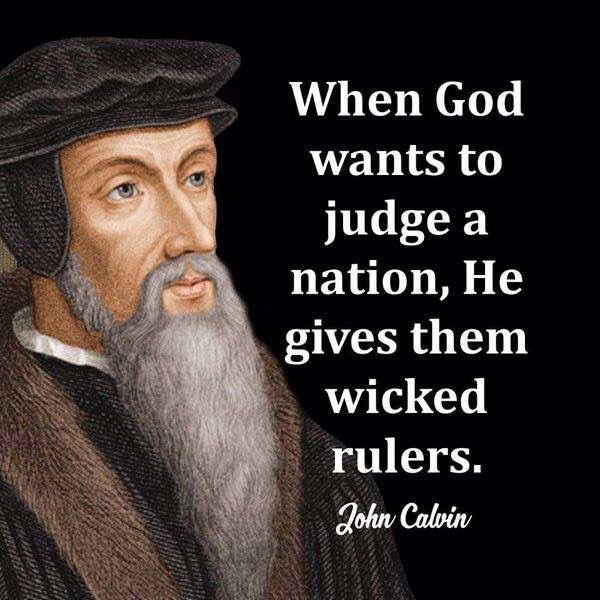
Therefore, I would like to invite you to pray with me for our country. Over the next 7 days, I will be making a new post each day. Each post will include a link to a reading from the Psalms and a brief instruction on how to use this reading as a guide for prayer. Let us put aside our desire to see a specific person win the election and have the courage to pray boldly for God to stay his judgment and not give us a wicked ruler. Instead, may He place in office the man or woman who will lead us to be the country that God desires (and designed) us to be. 

Will you please pray with me?


Read Psalm 37:1-11

Identify what God is saying about Himself in this passage. Boil it down into a one or two-word summary (e.g., God is ____ ) and confess that truth back to God, asking Him to reveal Himself in this way through your day and this election cycle. For example, “God, Your word says that You are ______. Sometimes it is hard to see you this way, especially with all the distractions of life, so I pray that You will reveal Yourself in this way in my life today and for this country during this election.”

v.1-2: Confess your worry over this election and how you fear it may damage our country. Acknowledge that God is in control more than man and your intent is to place your trust in His will.

Confess that it often seems like evil people prosper. Ask that in this election the wicked will “fade like the grass and wither  like the green herb.”

v.3-4: Dedicate yourself to the LORD. Acknowledge that you are placing your trust in Him. Ask Him to show you how you can demonstrate each day that your faith is in Him, not in a political party or a person representing that party, to heal our country.

Commit yourself to doing good each day. Ask the Holy Spirit to reveal to you where your definition of “good” and God’s definition of “good” separates. Ask Him to produce the change within you that needs to be made so that you may live your life as defined by God’s worldview as revealed in scripture.

Ask God to shield this country from wickedness so that you may dwell in it and feed on faithfulness. Ask God to give you and the people of our nation the desires of His heart so that His purposes may be fulfilled.

v. 5-6: Rejoice that you have an active and an acting God. Ask Him to “bring forth your righteousness as the light and your justice as the noonday.”

v.7-9: Take a moment and be still. Let at least 20 seconds pass by in silence. Confess how hard it can be to be still before the LORD and why. Ask Him to give you the strength and the ability to wait patiently for Him, because you know this is another expression of putting your trust in Him.

Ask Him to give you peace, because you know that God is in control, not “the man who carries out evil devices!”

Ask God to keep you from anger and wrath! To shed your worry about this election because it tends only to evil. Ask that God will keep you and all Americans from becoming “evildoers” so that we are not cut off from Him. But may we all be those who wait for the LORD and inherit the land.

v.10-11: Give thanks that “in just a little while, the wicked will be no more;” that “though you look carefully at his place, he will not be there.” Not because man has triumphed in this election but because God has. Ask for meekness and the delight of abundant peace.

Thank Him for hearing your prayers and for answering them. In Jesus’ name, Amen.

Quick Thoughts: “You are my God.”

5107569575_8e95030273

But I trust in you, LORD; I say, “You are my God.”

— Psalm 31:14

Have you ever thought about this phrase? What does it mean to declare that something or someone is your God?

According to Psalm 31, here are some answers below (corresponding verse in parentheses).

To say, “You are my God” means:

  1. You trust in this person/thing to deliver you out of difficult situations. It is the refuge that you run into for shelter when life is beating you up. (verse 1).
  2. You rely on it to be attentive to your needs, to be quick and effective in the salvation you seek. (verse 2)
  3. You seek wisdom and guidance from it about how to make sense out of your chaotic life. (verse 3)
  4. It is that thing that you seek to glorify with your life, that which you are willing to give the credit for your successes, instead of yourself. (verse 3)
  5. You rely on this person/thing for not only protecting you from present troubles but also future ones. (verse 4)
  6. All that your god embodies is honorable and true to you. Those that contradict your god, you abhor. (verse 6)
  7. You feel that your god understands you and you rejoice in the intimacy you have with it. (verse 7)
  8. You trust in this god to not only deliver you but to also expand your territory so that you have freedom to roam. (verse 8)
  9. You rely on it during times of grief, anguish, suffering, and affliction. When you are at your weakest and an utter derision to all around you, you still cling to this god to keep you from shame. (verse 9-17)
  10. You seek vengeance through it, to give you the justice you cannot get on your own. (verses 18, 23)
  11. You view it as the source of good things and a rewarder of those who are faithful to it. (verse 19)
  12. You trust it to protect you from harassment, physical harm, emotional pain, and hopelessness. (verse 12, 20-22)
  13. You rely on it to give you strength and hope. (verse 24)
  14. You find your resilience grows out of its character and presence in your life. (verse 24)
  15. You decide to surrender your life to its influence and control, to be “true” to it because you believe you cannot manage your life without it. (verse 23)

Let’s be honest. Gods can take many forms. Your god may be money, intelligence, alcohol, sex, food, work, humor, praise from others, self-harm, rationalizations, justifications, learning/reading, social media, depression, Netflix, busy-work, or the many-headed hydra of have to’s that plague us from day to day.

OR…your god may be religion, doctrine, good works, volunteering, going the extra mile for someone in need, false humility, presenting the “perfect picture”to outsiders, guilt, praying (instead of doing), doubt, materialism/shopping, or the unending list of do’s and don’ts that echo daily through our head.

Or it may be something else entirely.

But whatever you proclaim to be your god (even if you do not believe in the supernatural and claim yourself as your highest authority) will eventually be measured. Not by the standard of how well it meets your selfish ends, but by the strength of its character while under duress.

You may pick your god. That is your right. But be careful what you dedicate your life to. Most gods break when tested, for they are full of impurities and their promises are made of thin plastic. That is why you still feel hopeless. That is why there is a longing in your heart for something (ANYTHING!) to be real. For in those times that you see your god for all it truly is, you realize that all you have ever worshiped is a mere facsimile of the original and one, true God. Only He has the integrity to withstand the tests that attack Him and to deliver you from harm as well.

You must decide. To what, or whom, will you say: “You are my God.”

Sitting on the Stool

stool

“There are two spiritual activities which are to be unceasingly part of a believer’s life, two great pillars that hold up the believer in the matter of daily living.  One is the study of the Word of God.  Two, prayer.”

— John MacArthur

I’m not one to usually criticize John MacArthur, who some would argue is the best exegetical preacher alive today, but when I was listening to his sermon “The Paternity of Prayer” on my way to work the other day, the above quote popped out at me.

Immediately, I thought: Wait a minute. What about service?

I do not disagree that study and prayer are two essential aspects of the Christian life, but if we forget or minimize the necessity of service, we fail to put legs to what our study and praying have revealed. This is why I have often thought of Christianity like a three-legged stool that must continually be in balance, where one leg is study, one is prayer, and one is service.

You cannot neglect one or two of these legs without toppling over. For instance, a person that is great at study but does not pray, he only has head knowledge and can get filled up with the arrogance of much learning. Or if he has a passion for prayer so as to see great miracles occur but does not study or serve, he will not produce anything meaningful. This is why Solomon warns us:

“Of making many books there is no end, and much study is a weariness of the flesh. The end of the matter; all has been heard. Fear God and keep his commandments, for this is the whole duty of man. For God will bring every deed into judgment, with every secret thing, whether good or evil.” (Ecc. 12:12-14)

And it is why Paul says:

“And if I have prophetic powers, and understand all mysteries and all knowledge, and if I have all faith, so as to remove mountains, but have not love, I am nothing.” (1 Cor 13:2)

In both situations, Solomon and Paul emphasize that the most important thing is not knowledge or faith by itself, but it is adding both of these things to what you do. As Paul later wrote in Galatians 5:6: “The only thing that counts is faith expressing itself through love.” (NIV)

Service, then, is a necessary leg of the Christian existence. If it was not, James would not have argued that it is our deeds that prove our faith (Ja. 2:17-18) Jesus would not have said, “By this everyone will know that you are my disciples, if you love one another.” (Jn. 13:35) And the disciples in Acts would not have delegated the work of distributing food to the widows to seven godly men so that The 12 would not neglect “prayer and the ministry of the Word.” (Acts 6:1-4)

I understand that it is safer to remain in one’s study, surrounded by books and excavating truths never before understood. I respect that it feels more comfortable, and at times it feels more spiritual, to pray for a person or a situation, rather than get involved. But God calls us out of our safe places and asks us to leave our comfort zones. This is why Jesus tells us “you will be my witnesses in Jerusalem, and in all Judea and Samaria, and to the ends of the earth.” (Acts 1:8) Because we are to be a going people. We are to be an engaging people. We are revolutionaries who are on a mission to change the culture of our homes, communities, and nations. We are a people who are to serve “by the strength that God supplies—in order that in everything God may be glorified through Jesus Christ.” (1 Peter 4:11)

We are not to be cowardly or sluggish or foolish. Those are mistakes the anxious. We are not to be arrogant, doubting, or disbelieving. Those are the mistakes of the inactive. We are to be doing, going, and serving. Giving our bodies up as living sacrifices (Rom. 12:1), which is “your spiritual worship” (or, “your rational service“).

Neglect not this third leg of Christianity. It is where you get to see the truth you’ve studied in action, and where you witness your prayers become weapons of warfare. It is where you are allowed to join the holy, sovereign, creating God in the redemptive work He is doing. To reject such an honor is disrespectful. To refuse such a privilege is unthinkable. No man is remembered who does not add service to his study and prayer.

Quick Thoughts: God is One

one_cube-image

Dt. 6:4 – The LORD our God, the LORD is one

Isa 45:7 – I form the light and create darkness,
    I bring prosperity and create disaster;
    I, the Lord, do all these things.

1st Jn 4:8 – “God is love.” We hear this quoted all the time. Sometimes from a person who is trying to justify their behavior to us and sometimes from ourselves. But is God only love? Is He not also Creator, Provider, Sustainer, Judge,Redeemer, Forgiver, Covenant maker, Faithful, the Truth, the Way, the Life, etc?  When we talk about God, when we use the term “the LORD” or “God” do we not reference ALL of who He is? True, God is Love, but God is more than that.  Don’t get hung up on only one characteristic of God to the exclusion of the others. Otherwise, you will not only have an inaccurate view of God but you will also expect God to behave according to your definition of who He is, instead of you adjusting yourself to the reality of His person. Remember, God is one. He is the God who creates both prosperity and disaster (Isa 45:7). He is not separate from the sufferings we endure. Indeed, His love does not prohibit Him from understanding or from creating our calamity. He is sovereign and in control of it all. To some people, this seems like a cosmic sadist is at work, while others would argue that it is unloving to “create calamity.” But is it? A loving parent will often allow natural consequences to reveal truths to their child which promote growth or wisdom or they will implement logical consequences to teach a child. Similarly, God in His providential wisdom does not absolve us from suffering. He uses it in perfect symmetry with His other characteristics so that no part of Himself is separate from another. God is ONE. We cannot worship only the aspects of God that we like or that appeal to our sensibilities. We must worship all of the oneness of God in order to understand Him as the God that is in control of it all.

Quick Thoughts: Whose Joy is It?

lastingjoy2

“And they kept the Feast of Unleavened Bread seven days with joy, for the Lord had made them joyful and had turned the heart of the king of Assyria to them, so that he aided them in the work of the house of God, the God of Israel.” (Ezra 6:22, ESV)

Several key thoughts from this passage:

1) As students of history, we have the advantage of hindsight. We know the story and the after-story. We know, for instance, that though the Israelites responded in joy, their joy did not last. Eventually, they lapsed into rebellion again. But is this really abnormal?  Joy, for most of us, is temporary. It is a “now” emotion. It can be summoned by memory but this is only remembering joy. The experience of joy itself is always high, electric, and now. It can last for seconds or, in the case of this verse, it can last for days. But eventually, it passes. The “now” must always conclude and transition into another moment…and another…and another. And these succeeding moments may not be positive, causing us to lose the experience of joy and doubt the God that once lifted us so high.

2) There was one cause of their joy: God and God alone. God made them joyful AND He turned the heart of the king of Assyria to them. In other words, God worked on them both internally and externally to make their joy complete. He did not leave them with the temporary joy of endorphins due to the miraculous change in the political landscape. Rather, God MADE them joyful. He worked in their spirit, pointing them to a joy rooted in Him more than the kings of Earth. This is God-centered joy, the everlasting spring that pours out joy as a response to the person and work of the eternal God. And since He is eternal this joy does not fade away like historical joy.

3)  That is why we do not build a theology around the “now” moments of joy but rather around the God who completes our joy, the One to whom we can sing, “For you, O Lord, have made me glad by your work; at the works of your hands I sing for joy.” (Ps. 92:4) and the One in whom we can proclaim, even in life’s darkest moments, “The joy of the LORD is [my] strength.” (Neh. 8:10)

So, here’s my question: Where is your joy? In what or whom do you find yourself rejoicing? What makes you glad? Is it when your moments temporarily align with your agenda or will? Or is it in the eternal God who moves the hearts of His people, and of kings, to accomplish His agenda and will? Let’s be honest here. Who rules your joy? You or God?